Electrical failures in industrial and commercial systems can often be traced back to a single overlooked component: the panelboard. Without the right configuration, a panelboard can cause inefficiencies, unexpected downtime, and costly repairs.
According to recent studies, 80% of unplanned downtime in manufacturing is due to equipment failure, often tied to issues in power distribution systems. This not only halts production but also impacts safety and overall system performance.
In this blog, we will explain what panelboards are, explore their various types, and offer guidance on selecting the right one for your needs, ensuring a reliable and efficient power distribution setup for your facility.
Key Takeaways
Panelboards are essential for electrical distribution, dividing incoming power into multiple circuits while providing overload protection through circuit breakers or fuses.
Different types of panelboards, such as lighting, power, control panels (PCC, MCC), and sub panels, cater to specific applications, from managing light circuits to controlling motors and large power loads.
Regular maintenance of panelboards is crucial to maintain reliable performance. Key tasks include tightening connections, cleaning dust, testing breakers, and checking grounding.
Safety considerations like maintaining clear access, conducting thermal inspections, and following lock-out/tag-out (LOTO) procedures reduce risks of faults, fires, and downtime.
Choosing the right panelboard type and configuration provides compliance, improves safety, and optimizes the overall performance and longevity of your electrical system.
What Are Panel Boards?
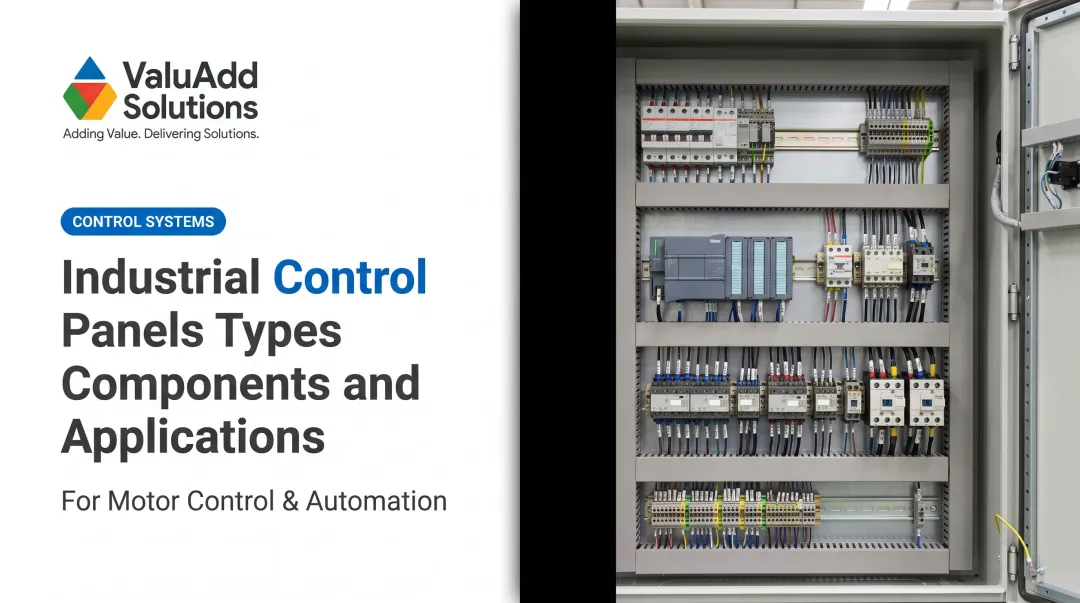
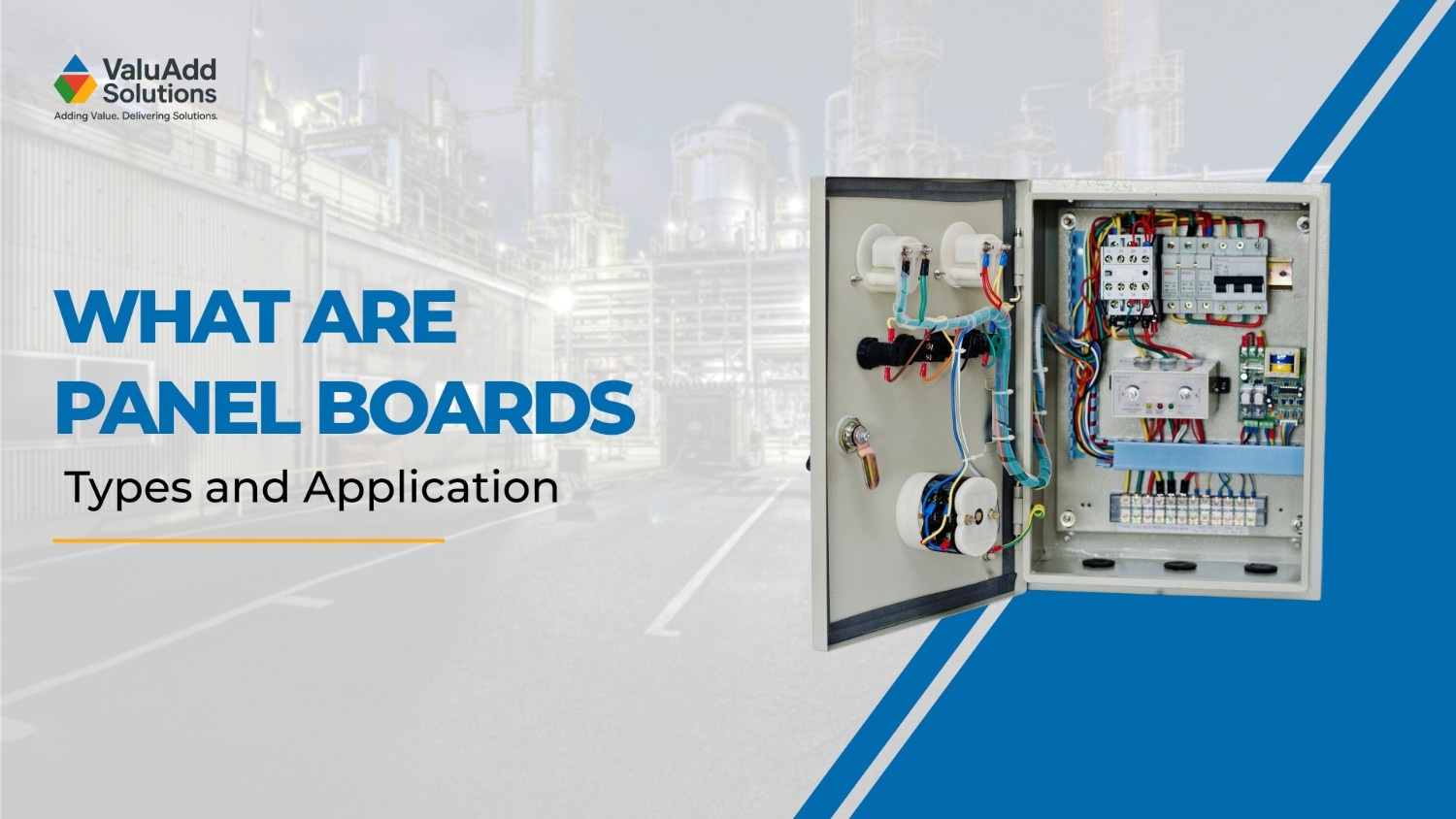
A panelboard, also widely called a distribution board, breaker panel, or electrical panel board, is a central unit in an electrical distribution system that divides incoming power into multiple branch circuits while housing protective devices such as circuit breakers or fuses.
It receives the main power feed, passes it through busbars, and routes it to individual circuits. Each branch circuit gets its own breaker or fuse inside the panelboard, which helps protect against overloads, short circuits, and fire hazards.
Key Components of a Panelboard and Their Functions
A panelboard consists of several critical components that manage power distribution and protection in electrical systems. Here’s a breakdown of its key parts:
Busbars: Conductors (usually copper or aluminum) that carry incoming electrical power and distribute it to individual circuits, forming the central distribution path within the panelboard.
Circuit Breakers (or Fuses): Devices that protect circuits by interrupting power in the event of an overload or short circuit, preventing damage to equipment and minimizing fire hazards.
Neutral and Ground Busbars: The neutral busbar provides a return path for current, while the ground busbar safely diverts fault currents to the earth.
Main Switch / Main Breaker: Controls the main power supply to the panelboard, allowing complete isolation or shutdown of the electrical system for maintenance or emergency situations.
Enclosure / Cabinet: A protective casing that shields internal components from dust, moisture, and physical damage.
Wiring & Terminal Blocks: Internal connections that link busbars, breakers, and external circuits, creating an organized and secure electrical distribution.
While these components remain consistent across panelboards, their configuration and capacity vary significantly based on the electrical demands they serve.
Types of Panelboards: Which One Is Right for Your Industry?
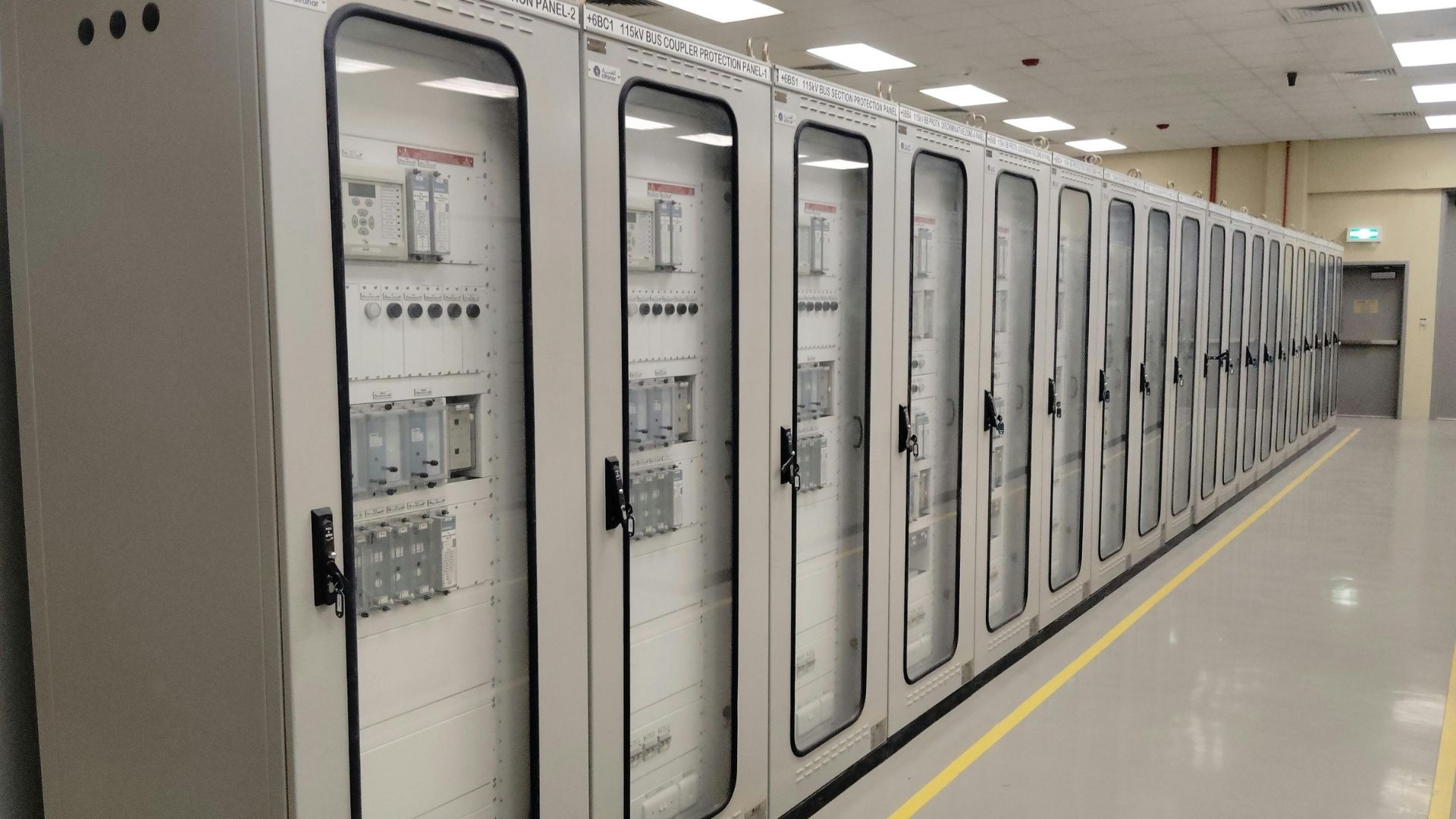
Panelboards come in various types, each designed to manage and distribute electrical power to specific circuits or systems. Common types include Lighting Panelboards and Power Panelboards, each serving distinct purposes in industrial, commercial, and residential applications.
Lighting Panelboards
Lighting panelboards are designed to distribute power specifically to lighting circuits, handling low to moderate load levels and facilitating organized distribution to lighting fixtures.
Application and Use Cases:
Office buildings
Commercial spaces
Residential buildings
Public spaces
Power Panelboards
Power panelboards handle heavier electrical loads than lighting panels. These are used to supply and distribute power to equipment or circuits with higher demand, such as machinery, HVAC systems, or large power‑consuming loads.
Application and Use Cases:
Manufacturing plants
Data centers
Large commercial buildings
Industrial facilities
Control Panels — PCC / MCC (Power Control Center / Motor Control Center)
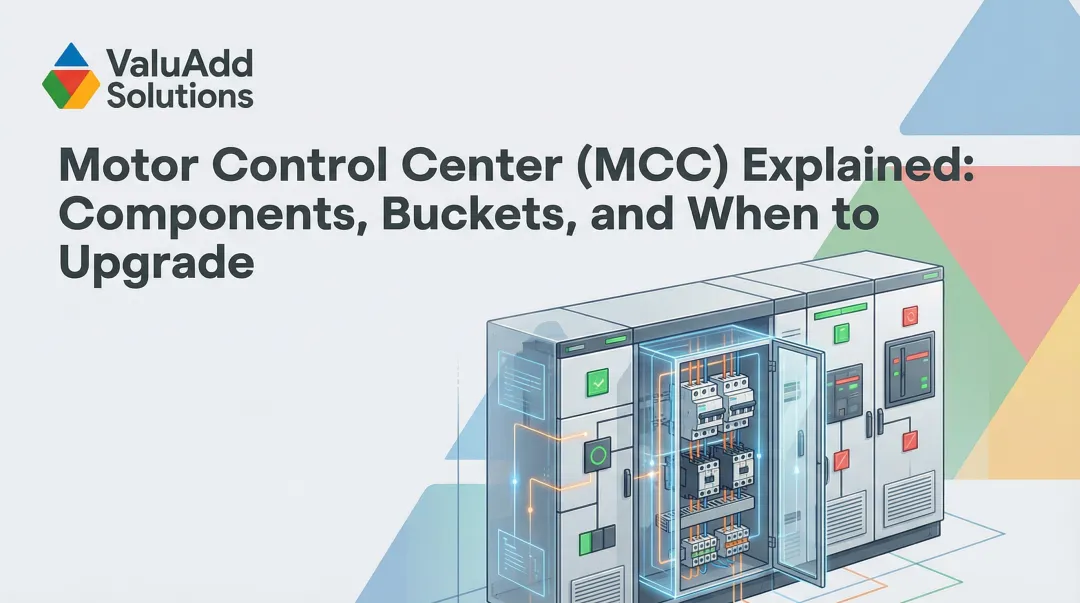
Control panels are specialized panelboards used in industrial or commercial settings to manage and distribute power and control signals to motors, machines, or complex power systems. A PCC (Power Control Center) handles multiple feeder circuits and power distribution. An MCC (Motor Control Center) is often used to control and protect electric motors, with starters, overload protection, and control circuitry.
Application and Use Cases:
Factories
Water/wastewater treatment plants
Industrial production lines
Automation systems
Distribution Panelboards
A Distribution Panelboard is a panelboard that takes power from a main panel (or supply source) and distributes it into multiple branch circuits, each protected by its own breaker or fuse. It serves as a centralized point for splitting the supply into smaller, manageable circuits.
Application and Use Cases:
Residential wiring
Commercial & office buildings
Light‑ to medium‑duty industrial settings
Sub‑distribution when the main panel feeds multiple zones
Main Breaker and Main Lug Panelboards
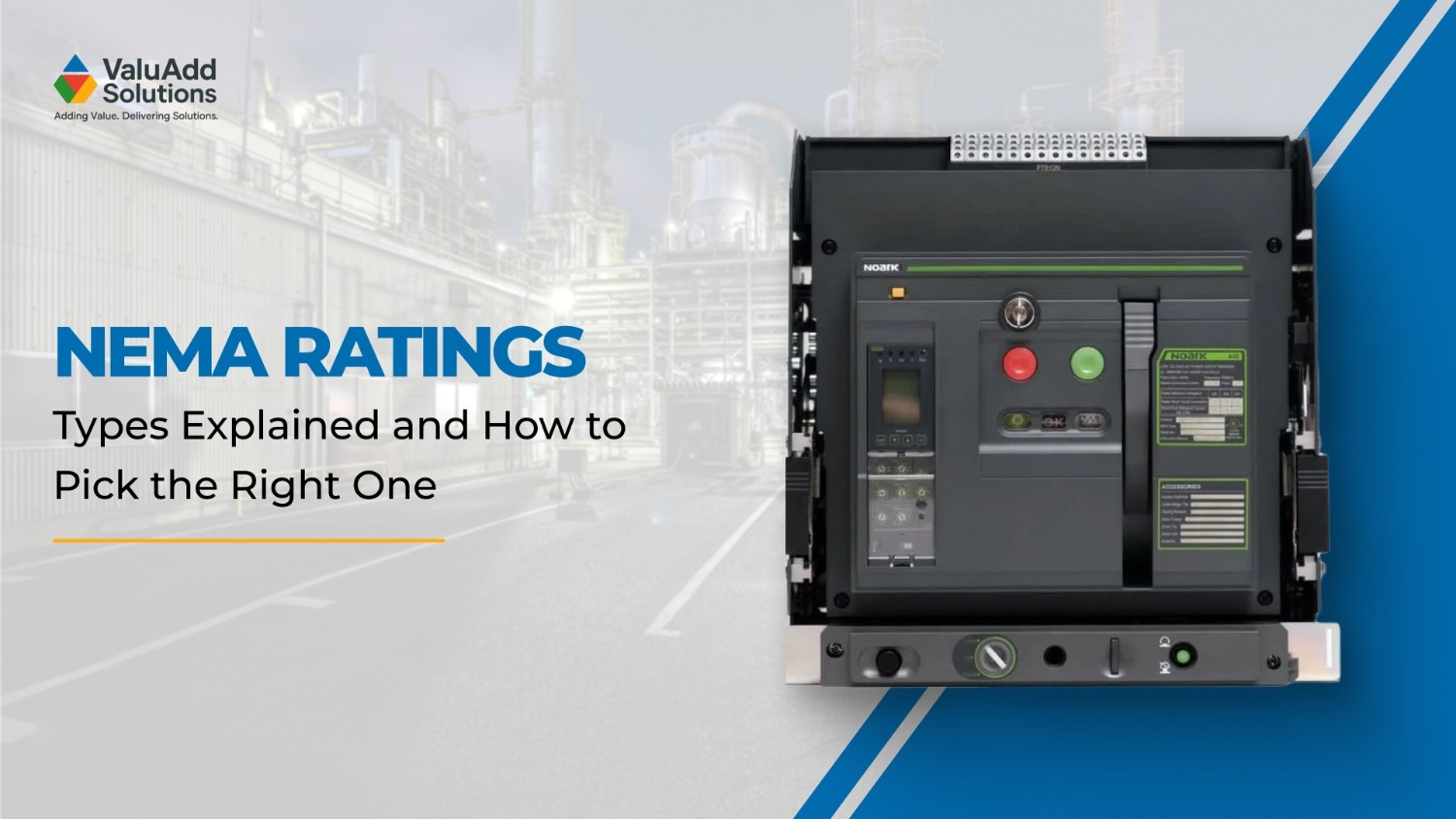
A Main Breaker Panelboard includes a built-in main circuit breaker, which acts as the main disconnect and overcurrent protection for the entire panel. It’s often used as the primary service panel for a building or facility.
A Main Lug Panelboard does not include a main breaker. It relies on an upstream breaker (in a different panel) for overcurrent protection and shutdown. It is commonly used as a sub‑distribution panel downstream of a main breaker panel.
Application and Use Cases:
Main Breaker Panelboard: Ideal as the building’s main service panel where utility power enters.
Main Lug Panelboard: Useful when adding circuits or sub‑panels downstream of an existing main breaker panel, good for workshops, and garages.
Industrial or commercial buildings require multiple downstream distribution points to break down loads geographically or functionally (e.g, separate sub‑panels for different floors, zones, or departments).
Sub Panel / Sub‑Distribution Panels
A Sub-Panel is a secondary panel that draws power from the main panel and redistributes it to a specific area or set of circuits. It is not a source of power but works as a local distribution point.
Application and Use Cases:
Used in large buildings or facilities to distribute power to distinct zones.
Enables expansion of circuit capacity when the main panel is full.
Convenient for localized control and maintenance — e.g, isolating power to a specific section (garage, machinery bay, HVAC zone).
Selecting the right panelboard is only half the equation. Even the most appropriate configuration can fail without proper upkeep and attention to operational safety.
Maintenance & Safety Guidance for Panelboards
Keeping panelboards in top condition is critical to avoid faults, fires, and unexpected downtime. A well‑maintained panelboard delivers reliable power distribution, protects circuits from overload and short‑circuits, and helps retain long‑term operational safety.
Regular visual inspections: Check panels periodically for signs of overheating, discoloration, moisture ingress, rust or corrosion, loose terminals, or damaged enclosures.
Tighten connections and clean dust/dirt: Loose or corroded connections can cause arcing or overheating. Make sure all busbars, breaker terminals, and wiring screws are properly torqued.
Test protective devices and breakers: Verify that breakers, fuses, and relays operate correctly under load. Replace any weak or faulty devices immediately to maintain protection integrity.
Check proper grounding and bonding: Check if neutral bars remain intact and that all metallic enclosures are properly bonded; this reduces shock hazard.
Maintain clear access and working space around panels: Keep the area in front of and around the panel clear of obstructions. Good access provides safe maintenance and quick shutdown in emergencies.
Use thermal inspection or infrared scanning (for industrial/commercial installations): Periodic thermal scans help detect hotspots, early signs of loose connections or overload, before they cause damage or fire.
Follow safe‑work procedures — de‑energize before opening: Before performing internal maintenance or inspection, shut off power, test for the absence of voltage, and follow lock‑out/tag‑out (LOTO) procedures.
Maintain documentation and labeling: Label all circuits clearly and keep records of maintenance, inspections, breaker replacement dates, and load changes.
These maintenance practices protect your investment, but handling the technical specifications and compliance requirements often demands specialized expertise.
Why Partner with ValuAdd: Your Technical Solutions Ally for Panelboards
At ValuAdd, we go beyond simply supplying electrical parts. We work with you as a technical solutions partner, helping you pick and apply the right panelboard type, configuration, and components to match your system’s load, safety, and operational needs.
Our services focus on the U.S. Southeast, especially across North Carolina, South Carolina, and Virginia. We have a deep market presence and strong relationships with distributors, OEMs, and integrators in this territory.
We support OEMs, panel builders, plant engineers, and facility managers across industrial, commercial, and utility domains.
We assess your power‑distribution requirements, load profiles, number of circuits, and environmental conditions, then recommend the optimal panelboard setup (whether main‑breaker, sub‑panel, distribution board, or MCC/PCC), plus compatible breakers, busbars, grounding, and protection devices.
Our advice helps you meet compliance standards, improve safety, and ensure that your electrical system remains strong and maintainable across its lifecycle.
Conclusion
Choosing the right panelboard is essential for maintaining power distribution efficiency, safety, and system reliability across industrial, commercial, and residential applications.
By understanding the various types of panelboards, such as lighting, power, control, distribution, and sub panels, engineers and plant heads can ensure their electrical systems are solid, compliant, and equipped to handle the demands of each specific environment. Regular maintenance and adherence to safety standards are key to preventing failures and extending the lifespan of your system.
At ValuAdd, we are more than just a product provider. We serve as your technical solutions partner, helping you choose the right panelboards and electrical components.
Contact and connect now with our industrial electrical engineers.
FAQs
What is the difference between a panelboard and a breaker?
A panelboard is an electrical distribution unit that houses multiple breakers to distribute power to different circuits, while a breaker is a protective device that automatically interrupts the flow of electricity in case of an overload or short circuit.
What is a panel box used for?
A panel box (or panelboard) is used to house and protect circuit breakers or fuses, distributing electrical power from the main source to various branch circuits, and ensuring safety through overcurrent protection.
What is the MCC and PCC panel?
An MCC (Motor Control Center) is a panelboard that controls electric motors, providing protection, control, and monitoring. A PCC (Power Control Center) is used for larger systems, managing multiple feeder circuits and power distribution for various equipment.
What's the difference between a switchboard and a panelboard?
A switchboard is a larger unit that manages high-power circuits and often includes switches, fuses, and meters. A panelboard is typically used for lower power applications, offering circuit protection and distribution within a facility.
What is the lifespan of a panelboard?
The lifespan of a panelboard typically ranges from 20 to 40 years, depending on its environment, usage, and maintenance. Regular inspections and upkeep can extend its service life and ensure safe operation.