Motor control solutions—Variable Frequency Drives (VFDs), soft starters, and electromagnetic contactors—are the nerve center of mining equipment. They govern how motors start, run, slow down, and stop safely. Choosing the wrong solution for an application creates mechanical damage, electrical faults, and safety risks that cascade through operations.
This guide covers three core motor control types, the applications they serve in mining, how to select the right solution, and what compliance and environmental specs you cannot compromise on.
Key Takeaways
- Motor control failure costs up to $180,000/hour in lost mining production
- VFDs deliver 13-42% energy savings on ventilation fans by reducing fan speed under partial load
- Soft starters reduce mechanical stress on high-inertia loads like crushers and loaded conveyors
- IP and NEMA enclosure ratings are mandatory for mining environments — dust, moisture, and vibration disqualify standard gear
- IEEE 519 compliance prevents harmonic distortion damage in multi-drive facilities
What Is Motor Control? The Basics for Heavy Industry
Motor control uses electrical and electronic devices to start, stop, regulate speed, and protect motors from overloads—translating the intent of an operator or automated system into safe, precise mechanical action.
Mining environments are uniquely demanding for motor control. Equipment faces:
- Heavy dust and moisture exposure
- Constant vibration and shock loads
- Extreme temperature swings
- High-voltage requirements (up to 13.8 kV)
- Need for fail-safe emergency shutoff
Standard industrial motor controls are often insufficient for these conditions. Mining applications require ruggedized enclosures, advanced protection schemes, and devices built to perform reliably where a failure can shut down an entire operation—or worse.
That's why the right equipment selection matters. The three primary motor control categories used in mining—VFDs, soft starters, and electromagnetic contactors/starters—each serve different operational goals, from precise speed control for conveyors to controlled starting torque for crushers.
The Three Types of Motor Control Solutions Used in Mining
Variable Frequency Drives (VFDs)
VFDs control motor speed by varying the frequency and voltage of the power supply. This enables precise speed regulation of conveyors, pumps, fans, and mills to match process demand rather than running at fixed full speed.
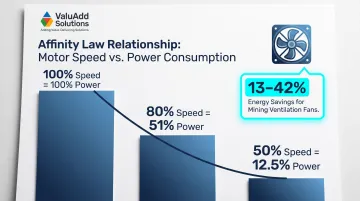
When a motor runs at reduced speed, power consumption drops dramatically — the affinity law relationship means power is proportional to the cube of speed. A study of underground main ventilation fans in hard rock mines showed energy savings of 13% to 42% through VFD speed reduction. Running a fan at 50% speed consumes only 12.5% of rated power, a substantial reduction in operating costs.
VFDs also eliminate inrush current spikes and mechanical shock during startup through controlled acceleration. For large conveyor or crusher motors, sudden full-voltage starts stress drive trains and shorten motor life. Ramping up speed gradually protects mechanical components, reduces peak demand charges from utilities, and extends equipment longevity.
One trade-off with VFDs is harmonic distortion. IEEE 519-2022 sets voltage THD limits ranging from 8.0% for systems ≤ 1.0 kV down to 1.5% for systems > 161 kV. Unchecked harmonics cause overheating in motors and transformers, waveform distortion, and nuisance tripping.
ValuAdd's VFDs use H-Bridge multi-level technology, generating waveforms that closely approximate pure sine waves to reduce harmonic distortion at the source. The M2L series covers motors from 300 HP to 12,000 HP at voltages up to 7.2 kV, with IEEE 519 compliance built in — well-suited for mining installations where multiple large drives run simultaneously.
Soft Starters
Soft starters gradually ramp motor voltage during startup, reducing the mechanical stress of sudden full-load engagement. For high-inertia loads — crushers, ore-loaded conveyors, and centrifugal pumps — controlled startup torque is the difference between protecting a drive train and damaging one.
In mining, soft starters serve large SAG mills, hoisting systems, and slurry pumps where startup torque must be controlled to protect drive trains and reduce peak current demand on the electrical distribution system. ValuAdd's MVE-P Series supports voltages from 2.3 kV to 15 kV and delivers up to 400% of full load current for 30 seconds — enough to overcome the high inertia these loads present at startup.
When to Choose Soft Starters vs. VFDs:
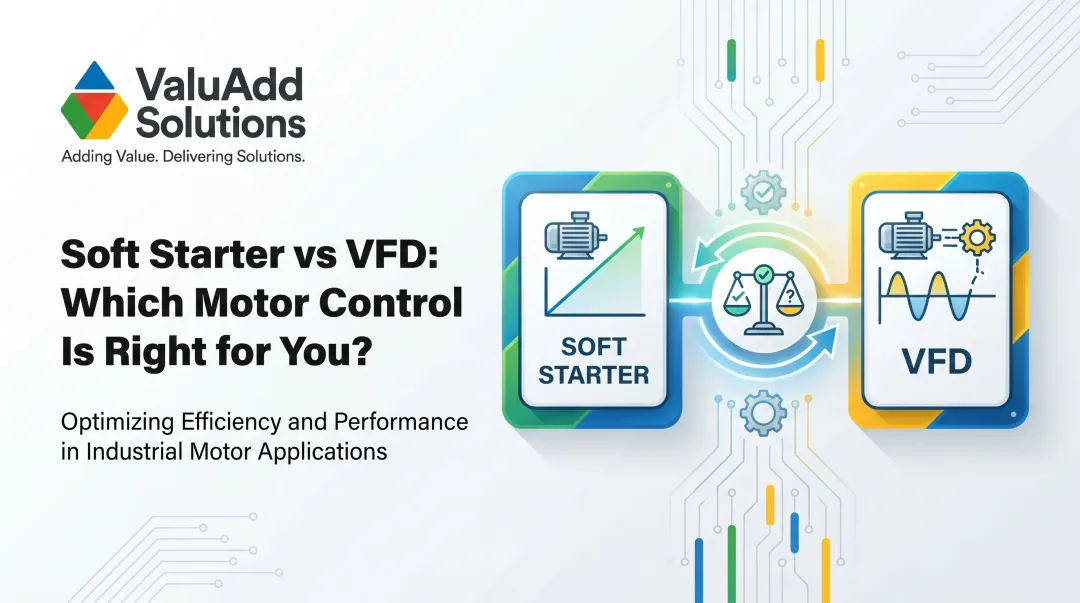
Soft starters are the right fit when speed variation during operation isn't needed but controlled startup and protection are. Compared to VFDs, they offer:
- Simpler installation with a smaller physical footprint
- Lower upfront cost — typically 30–40% less than a comparable VFD
- High starting torque capability for demanding loads
Crushers typically require approximately 125% torque at start and 200% at maximum torque, making a soft starter with high starting current capability the straightforward choice for fixed-speed crusher applications.
Electromagnetic Contactors and Motor Starters
Electromagnetic motor starters and contactors form the traditional backbone of mining motor control. They enable rapid connection and disconnection of power, essential for emergency shutdowns and protecting equipment from overloads.
These systems use overload relays, control coils, and electrical contacts to manage motor power. High-voltage durability and fast emergency disconnection are the primary reasons mining OEMs incorporate electromagnetic controls into their equipment designs.
IEC 60947-4-1 defines utilization categories that govern contactor selection:
- AC-1: Resistive loads (heating elements)
- AC-3: Standard squirrel cage motor starting
- AC-4: Heavy-duty applications (plugging, jogging, inching)
A contactor rated for 25A at AC-1 may only be rated for 9A at AC-3 due to inrush currents. Specifying the wrong utilization category in a high-cycle mining environment leads to premature contactor failure and unplanned downtime.
Key Mining Applications and What They Demand from Motor Control
Conveyors
Conveyors are the most motor-control-intensive application in mining. The Impumelelo coal mine operates an overland conveyor with 26.8 km of horizontal length—systems on this scale require:
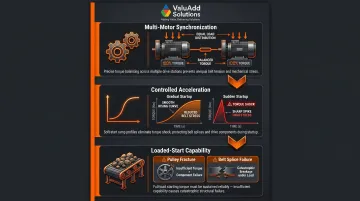
- Synchronization of multiple motors with controlled load sharing
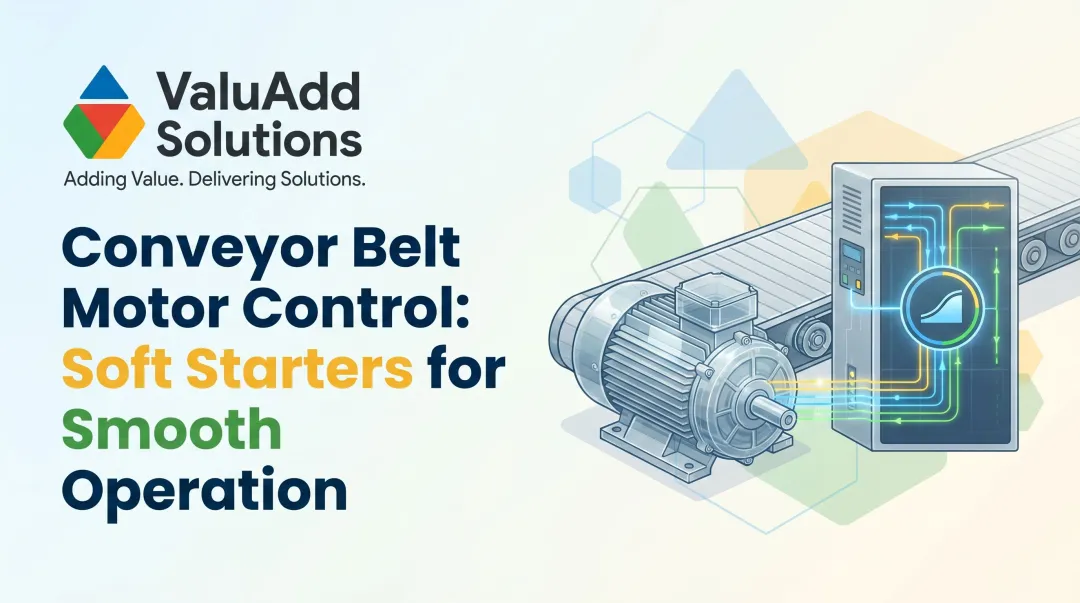
- Gradual acceleration to prevent belt slip and mechanical stress
- Ability to safely handle heavily loaded starts
Poor motor synchronization creates uneven belt tension and accelerated wear. Forensic analyses show that dynamic torque spikes during startup can break pulleys, structures, and belt splices. VFDs with proper load-sharing software solve this problem while enabling speed adjustment based on throughput demand.
Hoists and Winding Systems
Mine hoists have unique load cycles. Motors must:
- Deliver maximum torque at all speeds (from standstill to full speed)
- Handle frequent direction reversals
- Provide controlled regenerative braking as loads descend
MSHA regulations mandate that hoist deceleration during emergency braking shall not exceed 16 feet per second squared, requiring precise motor control with robust feedback systems. Any loss of control can endanger personnel and destroy equipment, making redundant protection, overload sensing, and reliable emergency stop capability non-negotiable specifications.
Crushers and Mills
Crushers and SAG mills present a high starting torque challenge. A fully loaded crusher has enormous rotational inertia, requiring controlled, sustained torque during startup without tripping overcurrent protection or damaging the drivetrain.
Each crusher type has a distinct torque-speed curve that must be analyzed before selecting motor control:
- Gyratory crushers — high breakaway torque with sustained load through the full speed range
- Cone crushers — variable load profiles depending on feed material and cavity fill
- Jaw crushers — cyclic torque demand driven by eccentric shaft dynamics
A motor solution well-suited for a pump will often fail to bring a loaded crusher to speed. For fixed-speed crusher applications, soft starters rated for high-torque duty cycles provide the torque control needed without the cost or complexity of a full VFD.
Pumps and Ventilation Fans
Unlike crushers, centrifugal pumps and mine ventilation fans reward variable-speed control. Their power demand follows the affinity law — cutting speed by 20% reduces power consumption by nearly 50%. A mining study on emulsion pump upgrades found energy cost savings exceeding 20% after switching from fixed-speed to VFD control. Running these systems at reduced speed when full capacity isn't needed delivers measurable energy savings with payback typically in the 18–36 month range.
Selecting the Right Motor Control Solution: Key Decision Factors
Application Load Profile:
Before selecting any motor control solution, map the speed vs. torque curve of the driven equipment. Fixed-speed loads with high startup torque typically call for soft starters or high-torque starters. Variable-speed processes benefit from VFDs. This decision framework determines both upfront costs and lifecycle performance.
Voltage Class:
Distinguish between low-voltage and medium-voltage applications:
- Up to 600V (low voltage) — covers smaller motors and auxiliary equipment
- 2.3 kV to 13.8 kV (medium voltage) — required for large hoists, mills, and major pump stations
In North American plants, 4.16 kV is the most common medium voltage class, per PowerFlex 6000 medium voltage drive guidance, though 6.6 kV and 11 kV are also standard. ValuAdd offers advanced medium voltage soft starter technology specifically engineered for these demanding applications, with the MVE-P Series supporting voltages up to 15 kV.
Power Quality and Harmonic Compliance:
Large mining sites with multiple drives are susceptible to harmonic distortion that degrades power quality and can damage sensitive equipment. Engineers should specify IEEE 519-compliant drives and confirm the solution addresses Total Harmonic Distortion (THD) limits. Passive and hybrid filters consistently reduce harmonics in large mining operations and remain the most cost-effective compliance path for sites running multiple drives.
Protection and Redundancy Requirements:
In continuous mining operations where downtime is catastrophic, motor control systems should include:
- Integrated overload protection
- Ground fault detection
- Fail-safe emergency stop capability
- Redundant control systems for critical applications
ValuAdd's MVRXE dual redundant soft starters provide backup starting capability, eliminating unplanned downtime in applications where motor failure cannot be tolerated.
Total Cost of Ownership vs. Upfront Cost:
A VFD costs 2-3x more than a soft starter upfront — but for variable-speed applications, energy savings alone typically recover that gap within two years. When comparing options, factor in:
- Energy savings from VFD operation (13-42% for variable-torque loads)
- Reduced mechanical wear from controlled starts
- Maintenance frequency and labor costs
- Downtime costs if the solution fails
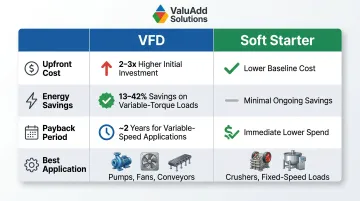
For fixed-speed applications, a soft starter remains the more practical choice — lower cost, simpler integration, and still delivers meaningful protection against mechanical stress at startup.
Environmental and Compliance Requirements You Cannot Compromise On
Enclosure Ratings:
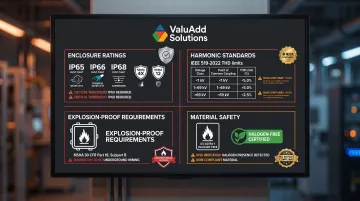
Mining environments expose motor control equipment to dust, moisture, explosive gases, and extreme temperatures. IP and NEMA enclosure ratings are mandatory specifications, not optional upgrades.
| Rating | Protection Level | Typical Mining Application |
|---|---|---|
| IP65 | Dust-tight + low-pressure water jets | Surface conveyors |
| IP66 | Dust-tight + powerful water jets | Washdown areas |
| IP68 | Dust-tight + prolonged immersion | Underground sumps |
| NEMA Type 4X | Corrosion-resistant, outdoor/washdown | Outdoor installations |
| NEMA Type 12 | Dust and drip protection | Enclosed industrial spaces |
ValuAdd's SW Series Washdown Drives carry UL Type 4X (IP66) ratings for high-pressure washdown applications, and their HMI panels are available with IP68 ratings for extreme underground environments.
Safety and Performance Standards:
Compliance certifications simplify specification and procurement:
- UL Listing covers temperature, overload, dielectric voltage withstand, and short circuit testing
- CE Certification is required for European equipment sales, covering EMC Directive 2014/30/EU and Low Voltage Directive 2014/35/EU
- NEMA Type 4X and Type 12 ratings are verified by independent testing
ValuAdd's product portfolio carries these certifications across VFDs, soft starters, and control systems, simplifying approval processes for mining engineers.
Mining-Specific Requirements:
In gassy mines, MSHA regulations require all electrical equipment inside the last open crosscut to have current-carrying parts completely enclosed in explosion-proof enclosures. Beyond explosion-proof requirements, halogen-free materials reduce toxic fume risk in enclosed underground environments. IEC 60754-1 specifies procedures for determining halogen acid gas evolved during combustion. ValuAdd offers multiple halogen-free cable management products, including cable ties and mounting bases constructed from halogen-free polyamide materials that comply with UNI EN 45545-2:2020 fire safety standards.
Frequently Asked Questions
Which type of motor is used in mining?
Mining relies on several motor types depending on the application: AC induction motors dominate pumps, conveyors, and fans; wound rotor motors handle variable torque loads; synchronous motors serve large mills and hoists where efficiency matters; and DC motors are reserved for hoist applications requiring precise speed and torque at all speeds.
What is motor control in simple terms?
Motor control refers to the use of electrical devices, including contactors, soft starters, or variable frequency drives, to manage how a motor starts, operates, and stops. These devices protect the motor and connected equipment from electrical overloads and mechanical damage.
What are the three types of motor control?
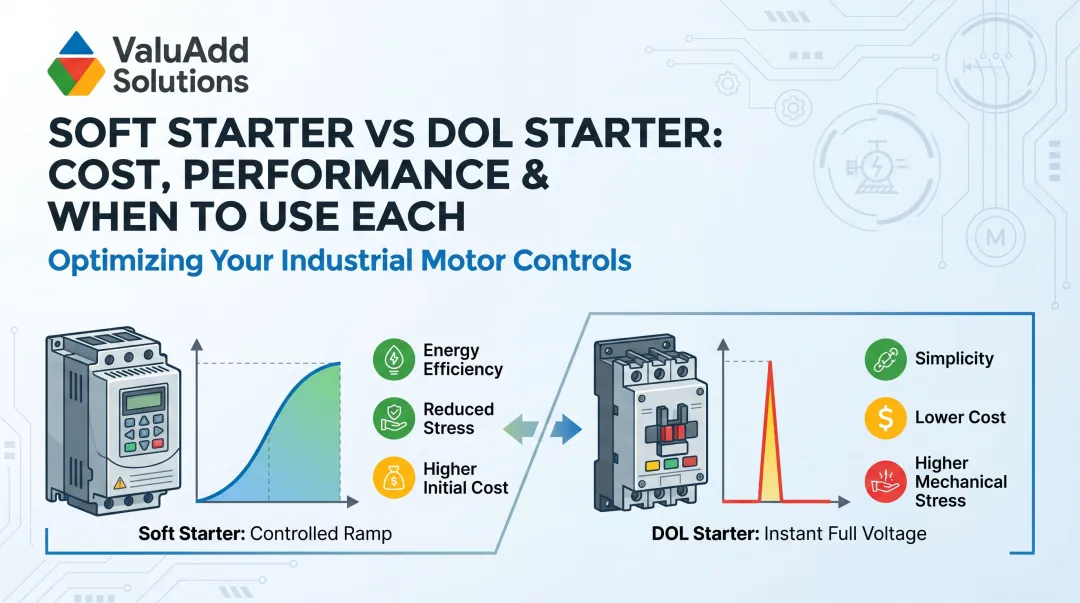
The three primary types are manual control (direct-on-line starters), reduced-voltage control (soft starters), and variable speed control (VFDs). Each offers a different balance of simplicity, cost, and capability suited to different mining applications.
What is the benefit of a high-torque starter?
High-torque starters allow motors to overcome the high inertia loads common in mining equipment like crushers and fully loaded conveyors during startup. This reduces the risk of motor stall, drivetrain damage, and tripped overcurrent protection — all while keeping acceleration controlled enough to protect mechanical components.
What is the operation of a heavy duty starter motor?
A heavy duty starter motor uses contactors and overload relays to connect a motor to line power while providing built-in protection against overloads and short circuits. In mining, these units are engineered for high-voltage, high-current duty cycles with rapid emergency disconnection to protect personnel and equipment.
What are the 5 types of starter motors?
The five main types are direct-on-line (DOL) starters, star-delta starters, auto-transformer starters, soft starters, and variable frequency drives (VFDs). Mining operations most commonly rely on soft starters and VFDs for superior motor protection, controlled acceleration, and reduced mechanical stress.