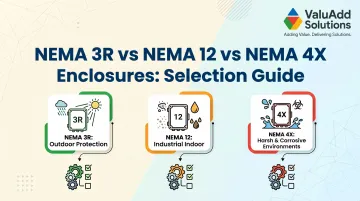
Introduction
Selecting the wrong NEMA enclosure rating creates measurable risk. Equipment failure, unplanned downtime, and code violations all trace back to a single specification decision made months before installation. Industrial facilities lose an average of $260,000 per hour of unplanned downtime, making correct enclosure selection a critical cost-avoidance strategy.
The confusion is understandable. NEMA 3R, NEMA 12, and NEMA 4X are the most commonly specified ratings in industrial and commercial projects, yet they're frequently misapplied. Specifiers either over-engineer—adding 50–100% to enclosure costs—or under-protect, exposing equipment to accelerated corrosion and water ingress.
This guide breaks down each rating's actual protection capabilities, compares where they diverge, and gives you a practical framework for matching enclosure type to your environment and application requirements.
Key Takeaways
- NEMA 3R handles outdoor rain, sleet, and snow—not windblown dust or washdown water
- NEMA 12 is indoor-only, protecting against circulating dust and oil seepage with no outdoor capability
- NEMA 4X provides the highest protection—windblown dust, hose washdown, and corrosion resistance for harsh environments
- Higher numbers don't guarantee better protection: NEMA 12 has no outdoor rating, while NEMA 3R does
- Match the rating to your actual site hazards—not the cheapest or most familiar option
Understanding NEMA 3R, NEMA 12, and NEMA 4X Enclosures
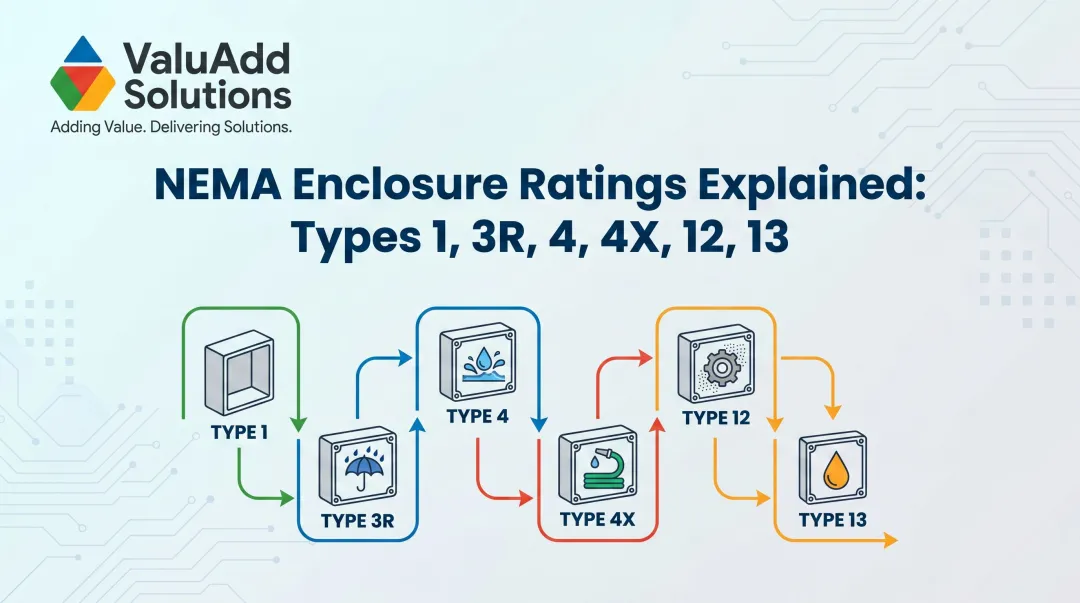
NEMA ratings are standardized classifications established by the National Electrical Manufacturers Association. They define how much environmental protection an electrical enclosure provides against dust, moisture, corrosion, and physical contact hazards.
ANSI/NEMA 250 governs these standards in the United States, covering control panels, disconnects, VFD enclosures, junction boxes, and other industrial electrical equipment rated up to 1,000 volts.
NEMA 3R: Outdoor Weather Protection
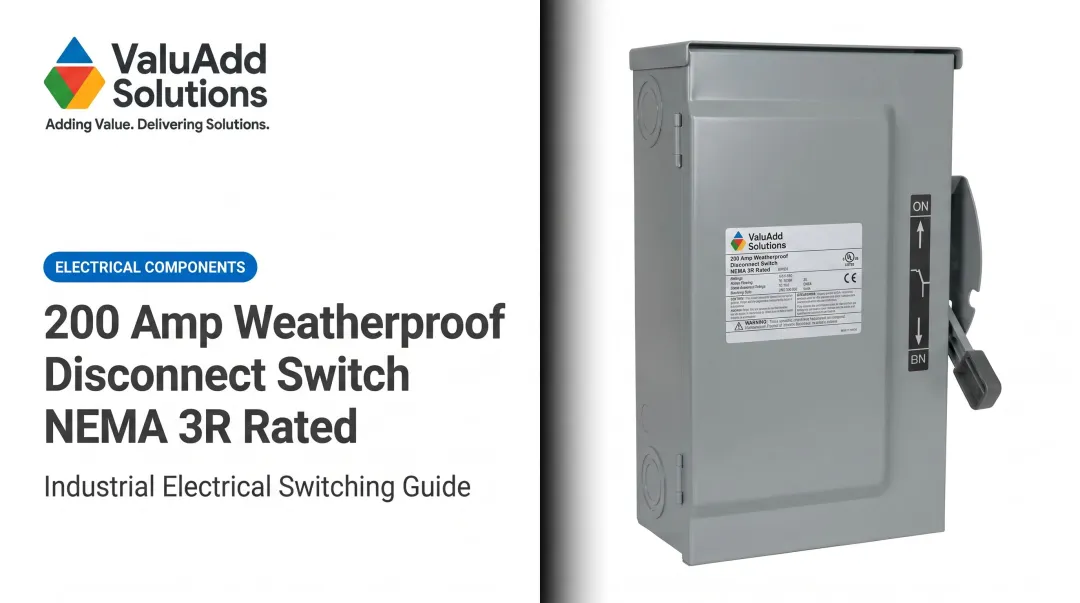
NEMA 3R enclosures are rated for indoor and outdoor use. They protect against falling rain, sleet, snow, and ice formation on the exterior. This makes NEMA 3R the standard choice for outdoor electrical panels, meter mains, service entrance equipment, and air conditioning disconnects.
What NEMA 3R does not cover — per NEMA enclosure type definitions:
- Windblown dust or airborne particulates
- Hose-directed or splashing water
- Corrosion from chemicals or salt exposure
These gaps cause common misapplications in manufacturing or process environments. The ventilated construction includes drain holes for heat dissipation and moisture weeping — a design that separates NEMA 3R from fully sealed ratings but rules it out for dusty or washdown settings.
NEMA 12: Indoor Industrial Environments
NEMA 12 is built exclusively for indoor use. It is the default choice for manufacturing floors, control panel enclosures, and factory automation systems. Protection includes:
- Circulating dust, lint, fibers, and airborne particles
- Dripping water and condensation
- Light oil seepage and splashing
The indoor limitation is absolute: NEMA 12 has no gasket seal rated for rain, outdoor weather, or pressurized water. Installing it outdoors violates UL listings and accelerates equipment failure.
The higher enclosure number does not mean broader protection. NEMA 12 offers less moisture and weather resistance than both NEMA 3R and NEMA 4X — a common source of costly misapplication.
NEMA 4X: Harsh Environment and Corrosion-Resistant Protection
NEMA 4X enclosures are rated for indoor and outdoor use, covering windblown dust, rain, sleet, snow, splashing water, hose-directed water, and corrosion. Of these three ratings, 4X sets the highest bar for environmental protection.
The "X" designation specifically means corrosion resistance. NEMA 250 requires Type 4X enclosures to pass 600 hours of salt spray testing plus an additional 200 hours, evaluated against AISI Type 304 stainless steel reference specimens.
Material choice within NEMA 4X significantly affects performance:
- 304 stainless steel: General food processing, dairies, mild industrial corrosion
- 316 stainless steel: Marine/coastal installations within 5 miles of saltwater, wastewater treatment, high-chloride environments
- Fiberglass: Highly corrosive chemical plants, outdoor UV exposure
- Polycarbonate: Marine settings, wastewater, applications requiring non-conductivity
Typical industries include wastewater treatment, food and beverage processing, chemical plants, coastal installations, oil and gas facilities, and any washdown environment.
Key Differences: NEMA 3R vs NEMA 12 vs NEMA 4X at a Glance
| Environmental Hazard | NEMA 3R | NEMA 12 | NEMA 4X |
|---|---|---|---|
| Location | Indoor / Outdoor | Indoor Only | Indoor / Outdoor |
| Rain, Snow, Sleet | Protected | Not Protected | Protected |
| Windblown Dust | Not Protected | Protected (Circulating) | Protected |
| Hose-Directed Water | Not Protected | Not Protected | Protected |
| Oil & Coolant Seepage | Not Protected | Protected | Not Protected (Unless specified) |
| Corrosive Agents | Not Protected | Not Protected | Protected |
| Typical Materials | Painted carbon steel, aluminum | Painted carbon steel | 304/316 stainless, fiberglass, polycarbonate |
| Primary Industries | Utility, power distribution, outdoor service equipment | Manufacturing, factory automation, indoor control panels | Wastewater, food processing, chemical plants, marine |
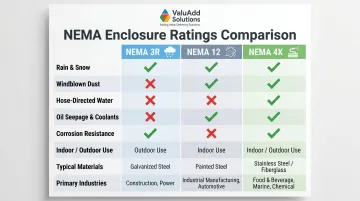
One pattern worth knowing before reading the table above: NEMA 12's higher number often leads specifiers to assume superior protection — it doesn't. NEMA enclosure numbers are not a linear scale; they reflect different application-specific standards. NEMA 12 is fundamentally an indoor rating.
On cost: NEMA 3R enclosures are typically the least expensive option for outdoor applications, while NEMA 12 is cost-effective for indoor industrial use. NEMA 4X carries a 50–100% price premium over NEMA 4 due to corrosion-resistant materials and sealed construction. Match the rating to the actual environment — specifying higher than needed adds cost without adding protection.
How to Choose the Right Enclosure for Your Application
Selecting the right enclosure requires answering five environmental and operational questions. The answers map directly to NEMA 3R, NEMA 12, or NEMA 4X.
Indoor vs. Outdoor Installation Location
Location is the first and most definitive filter. If the enclosure will be installed outdoors and exposed to weather, NEMA 12 is immediately eliminated. The choice narrows to NEMA 3R for general weather or NEMA 4X for harsh or corrosive outdoor environments.
"Indoor" doesn't automatically mean safe for NEMA 12. Indoor environments with washdown procedures, high-pressure cleaning, steam, or heavy condensation still require NEMA 4X.
Moisture and Liquid Exposure Level
Three tiers of liquid exposure determine enclosure selection:
- Incidental drips/light splash: NEMA 12 handles this indoors
- Falling rain/sleet: NEMA 3R covers outdoor precipitation
- Hose-directed or pressurized water: Requires NEMA 4X minimum
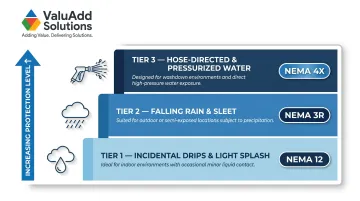
Industries where washdown is standard practice—food processing, beverage production, pharmaceutical, and wastewater treatment—require NEMA 4X regardless of indoor or outdoor installation.
Dust, Particulate, and Airborne Contaminant Exposure
Each rating has a distinct dust threshold. NEMA 12 handles settling or circulating particles in still indoor air—adequate for manufacturing floors, machining operations, and textile facilities. NEMA 4X steps up to windblown or pressurized airborne contaminants, covering both indoor and outdoor scenarios.
NEMA 3R offers no windblown dust protection. Grain processing, cement plants, and any facility with strong air movement and airborne particulates should rule it out immediately.
Corrosion Risk from Chemicals, Salt, or Humidity
Corrosion risk is the deciding factor between NEMA 4 (or NEMA 3R) and NEMA 4X. Salt air, chemical fumes, chlorinated water, or persistent humidity all require NEMA 4X's material-level protection.
Once NEMA 4X is confirmed, the material grade matters as much as the rating itself:
- 316 stainless steel: Recommended for marine/salt environments within 5 miles of coastline
- Fiberglass or polycarbonate: Preferred for chemical exposure
- 304 stainless steel: Adequate for general corrosion resistance where salt air and chemical splash are not present
Industry-Specific Compliance and Long-Term Cost Considerations
Certain industries have default enclosure requirements driven by code, insurance, or safety standards:
- Municipal wastewater: NEMA 4X, type 316 stainless steel required for outdoor panels and corrosive indoor areas
- Outdoor utility and power distribution: NEMA 3R is the standard default
- Manufacturing floor control panels: NEMA 12 covers most applications
Total cost of ownership matters here too. Under-specifying leads to premature equipment failure, increased maintenance, and potential code violations. Over-specifying adds upfront cost without a proportional protection benefit. Match the rating to the actual environment — not the worst-case scenario you can imagine, and not the cheapest option on the shelf.
How ValuAdd Can Help
ValuAdd is an industrial manufacturer representative specializing in control, automation, and electrical components for demanding industrial environments. Their portfolio includes NEMA Type 4X, NEMA 12, and NEMA 3R compliant solutions for manufacturing, water treatment, oil and gas, and processing plant applications.
Application-specific products:
- SW Series Washdown Drives: UL Type 4X (IP66) polycarbonate enclosures designed for high-pressure washdown environments in food processing and chemical plants
- RX3E and RX4E Soft Starters: NEMA 12-rated enclosures for indoor manufacturing floors, protecting against dust and oil seepage
- CSXi Series Pump Panels: NEMA 3R weatherproof enclosures for outdoor pump applications in water treatment facilities
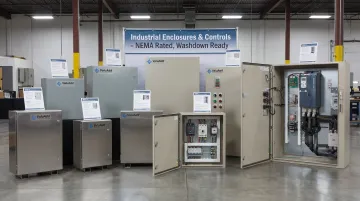
ValuAdd's control panels, VFD enclosures, and automation systems are UL Listed and CE Certified. Their IP65/IP66/IP68 ratings align directly with NEMA 4X and NEMA 12 protection levels for motor control and power distribution applications.
Key differentiators for enclosure and control selection:
- Provides application-specific guidance from experienced electrical and automation specialists
- Delivers custom engineering solutions tailored to site conditions and compliance requirements
- Offers territory-based support with on-site technical assistance
- Maintains strong manufacturer relationships for reliable component sourcing and lead times
Conclusion
Match the enclosure rating to the actual environmental hazards, installation location, and operational demands — nothing more, nothing less. For most applications, the decision comes down to three rules:
- NEMA 3R: Standard outdoor weather protection without corrosion or washdown requirements
- NEMA 12: Indoor industrial environments with dust accumulation and drip exposure
- NEMA 4X: Corrosion resistance, hose-directed water, or harsh indoor/outdoor conditions
Revisit enclosure ratings whenever facility conditions change — process modifications, equipment relocations, or expanded operations can introduce hazards the original rating was never designed to handle.
Frequently Asked Questions
What do NEMA enclosure ratings mean?
NEMA ratings are standardized classifications from the National Electrical Manufacturers Association. They define how well an electrical enclosure protects against dust, moisture, corrosion, and accidental contact — and serve as the primary enclosure specification standard in the United States.
What does a NEMA 4X rating mean?
NEMA 4X enclosures are rated for indoor and outdoor use, providing protection against windblown dust, rain, sleet, snow, and hose-directed water. The "X" specifically designates corrosion-resistant construction materials such as stainless steel, fiberglass, or polycarbonate.
Is NEMA 12 better than 4X?
No. NEMA 12 is a more limited rating designed exclusively for indoor use. NEMA 4X provides broader protection — including corrosion resistance and washdown capability — while NEMA 12 covers only dust and drip protection in indoor environments.
What do NEMA 1 and NEMA 2 ratings mean?
NEMA 1 is the most basic indoor rating, protecting against contact with electrical components and falling dirt. NEMA 2 adds protection against dripping water from condensation. Both are suited only for clean, dry indoor environments.
Can NEMA 12 enclosures be used outdoors?
No. NEMA 12 enclosures are designed for indoor use only and must not be installed outdoors. They lack the sealing, drain construction, and weather resistance required for outdoor exposure. Outdoor installations require a minimum of NEMA 3R.
What is the difference between NEMA 3R and NEMA 4X?
NEMA 3R protects against outdoor rain, sleet, and snow using a ventilated/drain design, but offers no protection against windblown dust, pressurized water, or corrosion. NEMA 4X covers all of those gaps through sealed, corrosion-resistant construction — at a higher cost.