That gap between the right product and the wrong one is exactly what this guide addresses.
This article covers what NEMA 3R actually means, how to read the critical specs (AIC ratings, voltage configurations, UL listings), how to choose between fusible and non-fusible models, and what wire sizing the NEC requires. The target audience is electricians, plant engineers, facility managers, and system integrators specifying equipment for demanding outdoor environments.
Key Takeaways
- NEMA 3R protects against rain, sleet, snow, and ice — not corrosion or hose-directed water (that's NEMA 4X)
- 200A continuous rating requires minimum 2/0 AWG copper or 4/0 AWG aluminum conductors per NEC
- AIC rating matters as much as ampacity — match the disconnect's interrupting capacity to your site's available fault current
- Fusible models provide overcurrent protection within the enclosure; non-fusible models rely entirely on upstream protection
- UL 98 listing is the minimum code compliance standard for enclosed switches in U.S. jurisdictions
What Is a 200 Amp Weatherproof Disconnect Switch?
A 200A weatherproof disconnect switch is a heavy-duty safety device installed between a power source and its load — at the service entrance, at outdoor loads, or along a feeder — rated to carry 200 amps continuously and housed in an enclosure designed for outdoor exposure.
Its core function: give authorized personnel a visible, accessible, mechanical means of de-energizing a circuit from outside. That applies directly to:
- First responders who need to kill power before entering a structure
- Maintenance technicians performing LOTO procedures
- Inspectors verifying NEC compliance
NEC 230.70(A)(1) requires the service disconnecting means to be installed in a readily accessible location either outside a building or inside nearest the point of service conductor entrance.
The 200A weatherproof disconnect is the standard solution for meeting this requirement at outdoor service points.
Weatherproof vs. Standard Indoor Disconnects
The "weatherproof" designation refers exclusively to the enclosure, not the electrical rating. A 200A indoor disconnect and a 200A NEMA 3R disconnect carry the same current — what changes is the housing:
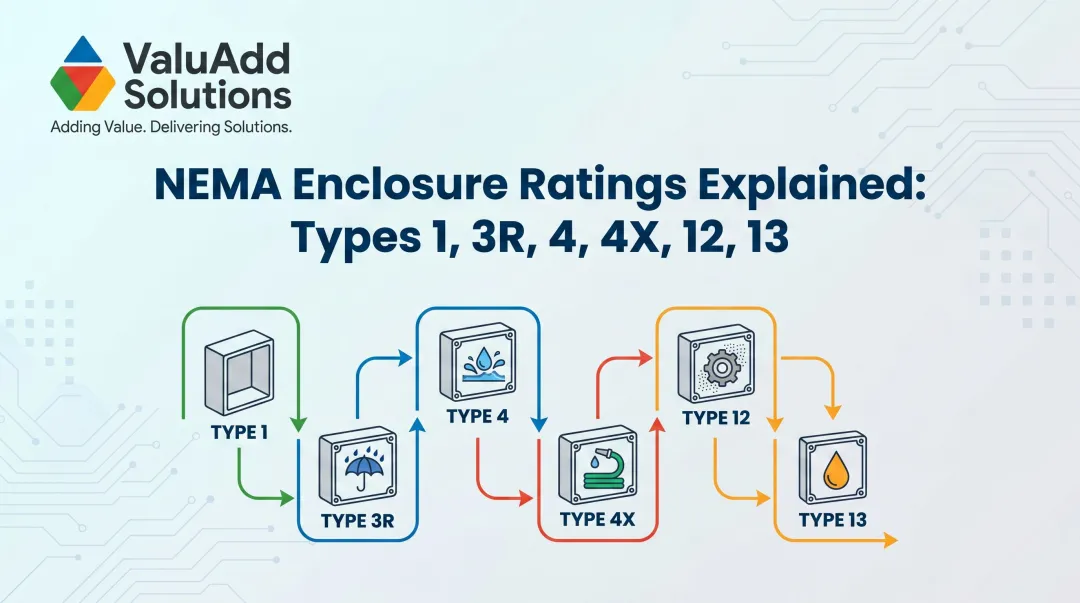
- Indoor (NEMA 1): Basic protection against contact; no moisture resistance
- NEMA 3R: Rain, sleet, snow, and ice protection; suitable for exterior mounting
- NEMA 4X: Adds corrosion resistance and hose-directed water protection
The electrical internals — contacts, fuse holders, terminals — are the same ampacity class. The enclosure determines where you can safely install them.
Understanding NEMA 3R Rating: What It Protects Against
Per NEMA's published enclosure type definitions, a Type 3R enclosure is designed for indoor or outdoor use and protects against:
- Falling dirt
- Rain, sleet, and snow ingress
- External ice formation damage
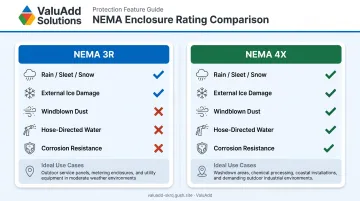
What it does not protect against: windblown dust, hose-directed water, or corrosion. Those require a higher rating.
NEMA 3R vs. NEMA 4X: Choosing the Right Rating
| Feature | NEMA 3R | NEMA 4X |
|---|---|---|
| Rain/sleet/snow | ✅ | ✅ |
| External ice damage | ✅ | ✅ |
| Windblown dust | ❌ | ✅ |
| Hose-directed water | ❌ | ✅ |
| Corrosion resistance | ❌ | ✅ |
Use NEMA 3R for: Rooftop HVAC equipment, exterior building walls, agricultural settings, generator interconnects, standard commercial service entrances.
Upgrade to NEMA 4X when: The site is near salt water, subject to chemical washdowns, or in a corrosive industrial atmosphere (wastewater treatment, oil and gas processing, coastal installations). The higher upfront cost of 4X is substantially less than replacing a corroded enclosure in two years.
Physical Construction Features
NEMA 3R-rated enclosures meet the standard through specific design elements:
- Gasketed covers that seal against rain intrusion
- Drip-shield construction directing water away from gaps
- UV-resistant housing that prevents degradation from sun exposure
- Corrosion-resistant hardware (stainless or zinc-plated fasteners)
Each of these features is verified against ANSI/NEMA 250-2020, which covers enclosures for electrical equipment rated up to 1000V. The standard tests rain resistance (Section 5.4) and outdoor windblown dust resistance (Section 5.5.1) as distinct categories.
One important nuance: NEMA itself is not a testing or certification body. Manufacturers may self-certify NEMA ratings or pursue third-party certification. When a project spec requires verified compliance, require UL listing separately — the two are not synonymous.
Key Technical Specifications to Evaluate
Ampacity gets most of the attention, but three other specification variables are equally important to get right.
Current, Voltage, and Temperature Rating
A 200A continuous rating applies at standard utilization voltages:
- 120/240V single-phase — residential and light commercial service entrances
- 240V or 480V three-phase — industrial motor loads and heavy commercial applications
- 600V — common in Canadian installations and some U.S. industrial configurations
Ambient temperature derating applies at elevated installation temperatures. Most 200A disconnects are rated at 40°C ambient — installations in enclosed mechanical rooms or direct sun exposure may require derating or a larger frame.
AIC/SCCR Interrupting Capacity
The disconnect must be rated to interrupt the maximum available fault current at the installation point — not just normal operating current. That fault current varies by location and depends heavily on fuse class when a fusible model is specified:
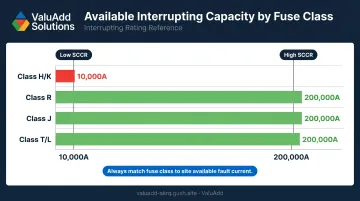
- Class H or K fuses: 10,000A maximum SCCR (per Schneider Electric data)
- Class R, J, T, or L fuses: Up to 200,000A SCCR
Eaton's published design guide confirms 200A heavy-duty NEMA 3R switches rated at 200,000A at 600V with Class R, J, or T fusing. Siemens catalog data shows the same pattern: 10,000 AIC with Class H and 200,000 AIC with Class R/J/T fuses across their 30-600A heavy-duty line.
Always specify the fuse class alongside the disconnect frame — not as a separate afterthought.
UL Listing and LOTO Provisions
UL 98 (14th edition, ANSI-revised 2023) covers enclosed and dead-front switches rated 4,000A or less at 1,000V or less. UL 98 listing is the minimum standard for code compliance in U.S. jurisdictions — it addresses construction, interrupting ratings, and performance requirements for the switch mechanism itself.
For lockout/tagout compliance, OSHA 29 CFR 1910.147 requires a positive means — key or combination lock — to hold an energy-isolating device in a safe position. Most 200A NEMA 3R disconnects include a padlockable handle as a standard feature; for facilities with active LOTO programs, confirm it's standard on the specified model, not an optional add-on.
ValuAdd stocks UL 98-listed and Class E2 Load Break-certified disconnect switches. Contact our technical team for model-level certification documentation on any specific unit.
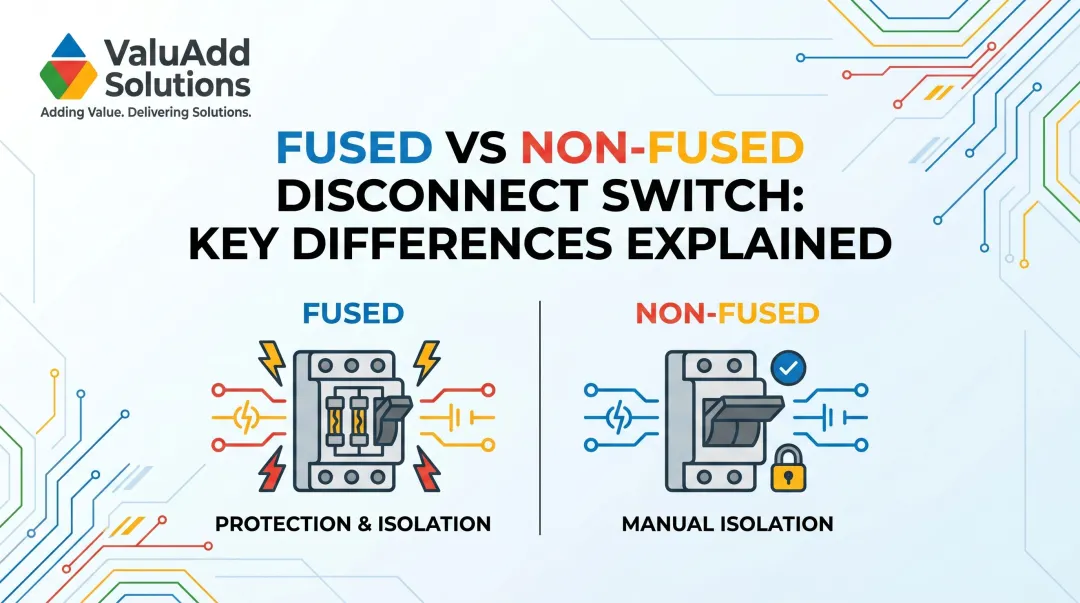
Fusible vs. Non-Fusible: Which Type Do You Need?
The right choice comes down to where overcurrent protection already exists in your system — and where it doesn't.
The Core Distinction
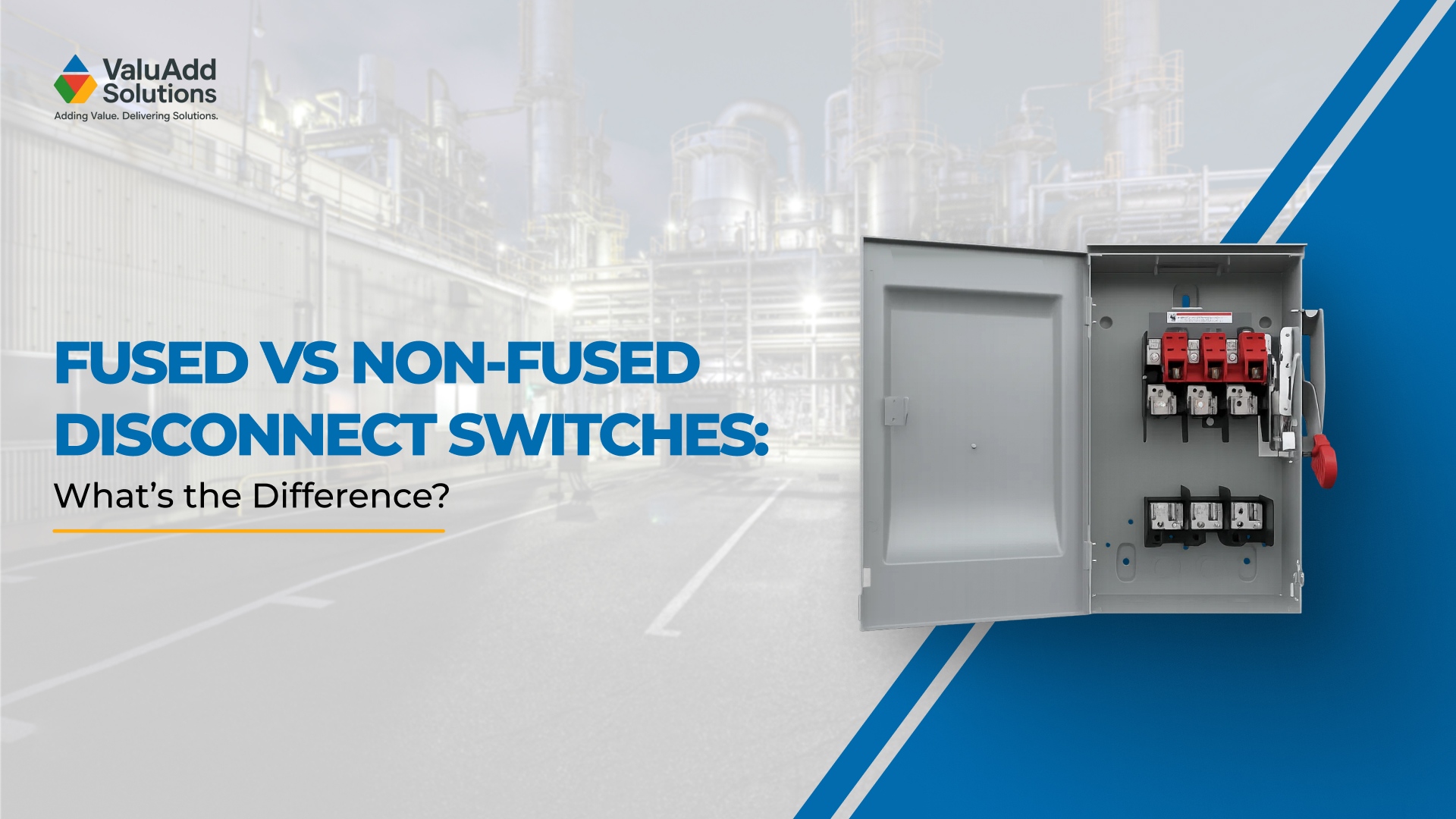
A fusible 200A disconnect contains cartridge fuse holders — typically Class R or Class J — that provide both overcurrent and short-circuit protection within the disconnect enclosure. When a fault occurs, the fuses clear the fault before the disconnect mechanism sees the full fault energy.
A non-fusible 200A disconnect provides only isolation: a mechanical on/off means with no internal overcurrent protection. Fault protection is entirely dependent on the upstream breaker or fuse panel.
Practical Decision Guide
Choose fusible when:
- No upstream breaker provides dedicated overcurrent protection for the specific circuit being isolated
- Protection coordination requires a specific fuse time-current characteristic that the upstream device doesn't provide
- The application involves motor loads where Class J time-delay fuses provide better coordination than a standard breaker
Choose non-fusible when:
- A properly sized upstream breaker already covers fault and overload protection for this circuit
- The disconnect is needed purely for safe isolation at the equipment — common in commercial service entrance applications with main breaker panels
- Minimizing ongoing maintenance is a priority (no fuses to inspect or replace)
Cost and Maintenance Implications
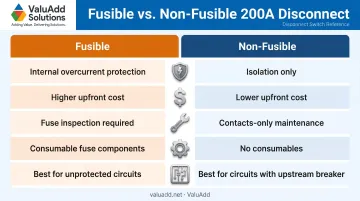
| Fusible | Non-Fusible | |
|---|---|---|
| Upfront Cost | Higher — fuse holder hardware adds cost | Lower — simpler mechanical assembly |
| Ongoing Maintenance | Fuse inspection and periodic replacement | Contacts and mechanical operation inspection only |
| Consumable Components | Yes — fuses are replaceable wear items | None |
Wire Sizing and Installation Requirements for a 200 Amp Disconnect
Conductor Sizing
For 200A service at the standard 75°C termination rating, NEC Table 310.12 requires:
- 2/0 AWG copper minimum
- 4/0 AWG aluminum or copper-clad aluminum minimum
Aluminum is common for service entrance conductors, offering lower cost and lighter weight for long runs. It requires AL/CU-rated termination lugs and proper anti-oxidant compound at connections. Verify the disconnect's terminal blocks carry an AL/CU rating before specifying aluminum conductors.
Voltage Drop and Maximum Run Length
No single NEC-mandated maximum distance applies to 4/0 aluminum. Voltage drop is the governing constraint. For a 200A load on a 240V single-phase system with a 3% allowable voltage drop (7.2V):
Using the AC resistance for 4/0 aluminum from NEC Chapter 9 Table 9 (approximately 0.201 ohm/1000 ft), the calculation is:
Max one-way distance = 7.2V ÷ (2 × 200A × 0.201/1000) ≈ 90 feet
Two practical sizing notes for longer runs:
- Runs beyond 90 feet at full load require upsizing to 250 kcmil or 350 kcmil aluminum to maintain acceptable voltage drop
- Always calculate based on actual running load current, not the 200A rated maximum
Key Installation Code Compliance Points
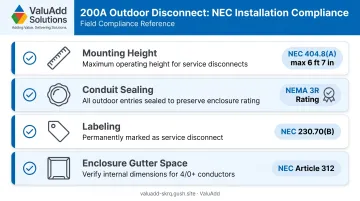
- Mounting height: NEC 404.8(A) limits operating handles to no higher than 2.0 m (6 ft 7 in) above floor or working platform
- Conduit sealing: All conduit entries must be sealed against moisture when mounted outdoors. Improper conduit sealing is the most common field failure mode that defeats NEMA 3R weatherproofing
- Labeling: NEC 230.70(B) requires each service disconnect to be permanently marked as a service disconnect
- Enclosure gutter space: The disconnect enclosure must provide sufficient wiring space to accommodate 4/0 or larger conductors — verify internal dimensions against NEC Article 312 wiring space requirements before ordering
Frequently Asked Questions
Do they make a 200 amp weatherproof disconnect?
Yes — 200A weatherproof disconnects are a standard product category from Eaton, Siemens, and Schneider Electric/Square D, among others. They're available in both NEMA 3R and NEMA 4X enclosures, in fusible and non-fusible configurations, across single-phase and three-phase voltage ratings.
What are the different types of 200 amp weatherproof disconnects?
The main variables are fusible vs. non-fusible, single-phase vs. three-phase, and enclosure rating (NEMA 3R for standard outdoor use, NEMA 4X for corrosive environments). In fusible models, fuse class (H, R, J, or T) determines interrupting capacity and coordination characteristics.
What size wire is required for a 200 amp weatherproof disconnect?
NEC Table 310.12 specifies a minimum of 2/0 AWG copper or 4/0 AWG aluminum at the 75°C rating for 200A service. Long runs may require upsizing to keep voltage drop within acceptable limits.
How far can you run 4/0 aluminum wire for a 200 amp disconnect?
On a 240V single-phase system at full load with 3% allowable voltage drop, 4/0 aluminum supports a maximum one-way run of approximately 90 feet. Beyond that, upsize to 250 kcmil or 350 kcmil — and always calculate using actual running load current, not the 200A nameplate rating.
What is the difference between NEMA 3R and NEMA 4X for outdoor disconnect switches?
NEMA 3R protects against rain, sleet, snow, and ice — suitable for most standard outdoor installations. NEMA 4X adds corrosion resistance and hose-directed water protection, making it the correct choice for coastal, marine, chemical processing, or industrial washdown environments.
Do I need a fusible or non-fusible 200 amp disconnect switch?
Choose a fusible model when no upstream breaker provides dedicated overcurrent protection for that circuit. If a properly sized breaker already handles fault and overload protection upstream, a non-fusible disconnect is sufficient — and typically costs less with no ongoing fuse maintenance.